
What Happened to USC Football?
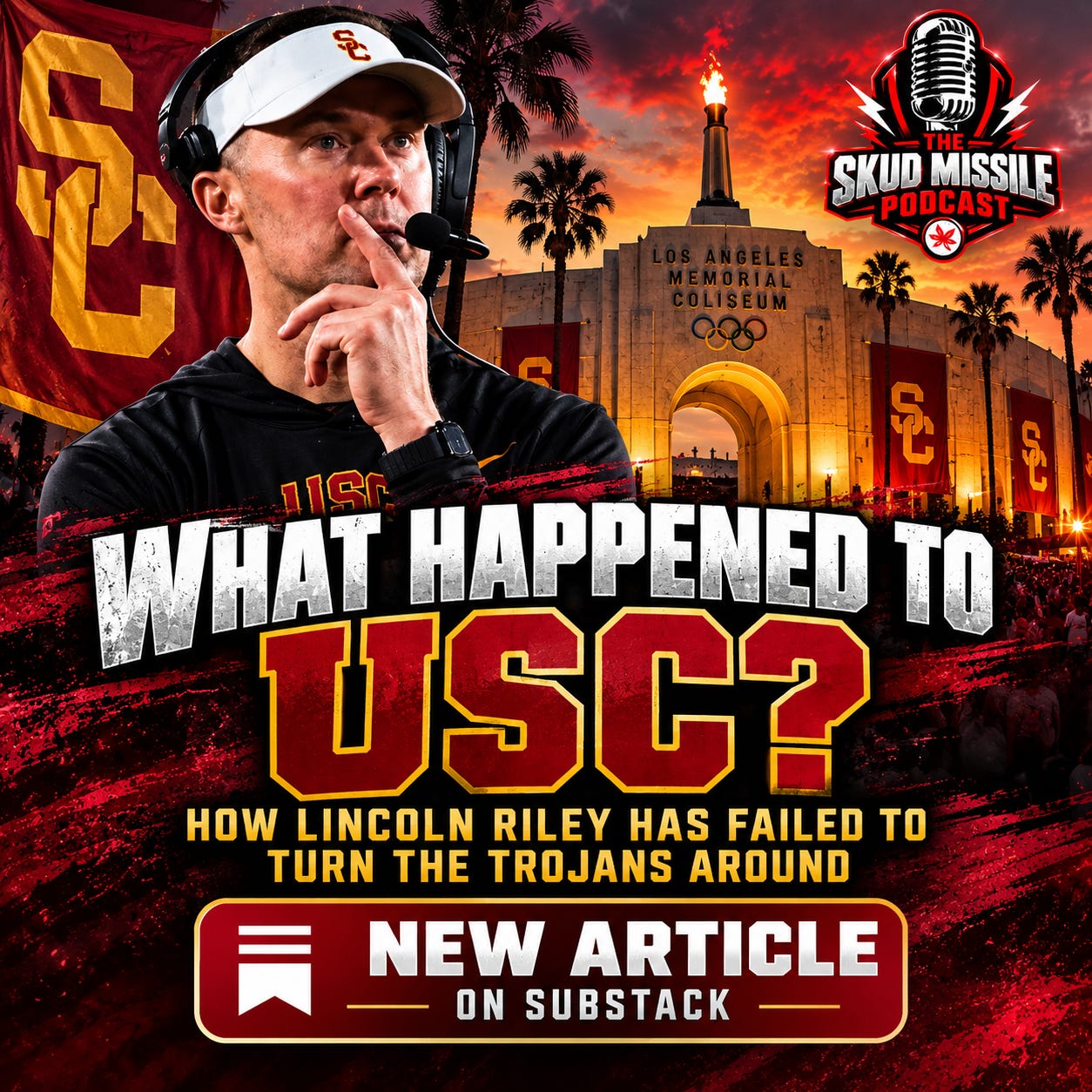
There are certain programs in college football that should never have to explain why they matter. Ohio State. Alabama. Notre Dame. Michigan. Texas. And USC.
That is why I continue to be completely baffled by what has happened to Southern California football. USC isn’t some program trying to manufacture tradition. This is a school with national championships, Heisman Trophy winners, iconic uniforms, the Los Angeles Memorial Coliseum and a seemingly endless list of legends who have played there. Marcus Allen. Ronnie Lott. Junior Seau. Carson Palmer. Matt Leinart. Reggie Bush. USC has always felt like one of those programs that should be built to dominate.
Think about everything USC has working in its favor. You’re recruiting players to Los Angeles. You have history, money, facilities, national recognition and access to one of the richest recruiting areas in the country. In the NIL and transfer portal era, USC should have even fewer obstacles standing between itself and college football’s elite.
Yet here we are.
Following Saturday night’s 41-27 loss to Oregon, I found myself asking the same question I’ve been asking for several years now: How has USC fallen this far, this fast, and why hasn’t Lincoln Riley been able to fix it?
When Riley arrived before the 2022 season, the hiring felt enormous. He had taken Oklahoma to the College Football Playoff three times. He had developed elite quarterbacks. His offenses were explosive, and he was considered one of the brightest offensive minds in college football. USC wasn’t bringing Riley to Los Angeles simply to make the Trojans respectable. He was hired to make USC feel like USC again.
Initially, it looked like that might happen quickly. USC went 11-3 in Riley’s first season. Caleb Williams won the Heisman Trophy, and the Trojans came within one victory of reaching the College Football Playoff. For a moment, it felt as though one of college football’s sleeping giants had finally awakened.
Instead, that season increasingly feels like the exception.
USC went 8-5 in 2023, then 7-6 in 2024. The Trojans improved to 9-4 last season, but again failed to reach the College Football Playoff. Now we are in Year Five of the Lincoln Riley era, and at some point, potential has to turn into actual results.
Maybe my expectations are influenced by remembering what USC looked like under Pete Carroll, but isn’t that supposed to be the standard at a place like USC? During Carroll’s run, the Trojans weren’t simply successful. They were terrifying. USC routinely walked onto the field with future NFL players everywhere. They were deeper, faster and more talented than almost everyone they played. When USC lost, it felt like a major college football story because losing simply wasn’t expected.
Today, USC feels like another pretty good team trying to prove it belongs among the elite.
That is what made Saturday’s loss to Oregon so frustrating. Losing to Oregon by itself isn’t embarrassing. Oregon has become one of the strongest programs in college football. But USC entered the game ranked No. 12, playing at home against No. 20 Oregon, with a chance to show that this version of the Trojans was finally different.
Instead, Oregon won 41-27.
USC allowed more than 500 yards of offense. Oregon scored on six of its final seven possessions, and much of that success came after starting quarterback Dante Moore left the game. USC had every opportunity to make a statement in front of its own crowd and instead produced another game that looked painfully familiar.
There were explosive offensive moments. There were penalties. There were questionable decisions. There were defensive breakdowns. And ultimately there was another loss in exactly the type of game USC needs to start winning if it wants to be treated like a legitimate national contender.
This is where the Lincoln Riley conversation becomes difficult.
I think Riley is an excellent offensive coach. His résumé with quarterbacks is undeniable. His teams have consistently been capable of scoring points, and USC has produced elite offensive talent under him. But Lincoln Riley wasn’t hired to be USC’s offensive coordinator. He was hired to rebuild the entire football program.
Five years into a coaching tenure, the explanations start running out. You can only talk about rebuilding the roster, changing the culture, developing recruiting classes or needing more time for so long. Eventually, it becomes your program. These are Riley’s players, Riley’s coaches, Riley’s culture and Riley’s results.
When Riley first arrived at USC, he talked about turning the program into the “mecca of college football.” At the time, that didn’t sound crazy. This is USC. There is no reason the Trojans shouldn’t have championship-level ambitions.
But nearly five years later, I look around the sport and see programs that appear much closer to what USC was supposed to become. Ohio State is there. Georgia is there. Texas is there. Oregon has built itself into a national power. These programs are recruiting, developing players and competing at the highest level.
USC is still trying to convince everyone it belongs in that group.
What makes the situation even harder to understand is that the usual excuses aren’t really there. The school has invested heavily in football. USC has upgraded its facilities, improved recruiting and brought in talent. This isn’t some forgotten program trying to compete without resources. Everything USC should need to win at the highest level is available.
So what exactly are we waiting for?
At USC, simply having a winning season can’t be the goal. Nine wins cannot automatically equal success. A bowl appearance cannot be the measuring stick. The standard at USC should be Big Ten championships, College Football Playoff appearances and competing for national championships.
Otherwise, why hire Lincoln Riley in the first place?
The most concerning part of all of this might be how normal USC losing big games has started to feel. There was once a time when a USC loss was shocking. Now when the Trojans lose to another nationally relevant opponent, it barely registers as a surprise.
That should bother anyone who remembers what USC football used to represent.
The mystique isn’t there anymore. The intimidation factor isn’t there. Opponents don’t walk into games against USC assuming they are about to face an overwhelming collection of talent. The Trojans are respected, but they aren’t feared.
And rebuilding that reputation takes more than landing highly rated recruits or opening impressive new facilities. It requires winning games like the one against Oregon. It requires beating good teams when the entire country is watching. It requires eventually turning “we’re getting closer” into “we’re back.”
I don’t say any of this because I dislike USC. In fact, it’s the opposite. College football is better when USC matters. The sport is more interesting when the Coliseum is packed for massive games, when USC-Notre Dame carries national championship implications, and when the best players in Southern California grow up dreaming about wearing cardinal and gold.
USC is one of the programs that helped define college football.
That’s why watching the Trojans become just another team fighting for relevance is so strange.
Maybe USC turns this season around. There are still games to play and opportunities ahead. But at some point, the conversation has to shift from what USC could become under Lincoln Riley to what USC actually has become under Lincoln Riley.
Right now, those are two very different things.
USC hired one of the biggest names in coaching to restore one of the biggest names in college football.
Almost five years later, we’re still waiting.
And at USC, waiting this long should never feel normal.