
Sophie Cunningham, the WNBA, and the Culture War: Can Sports Ever Stay Just About Sports?
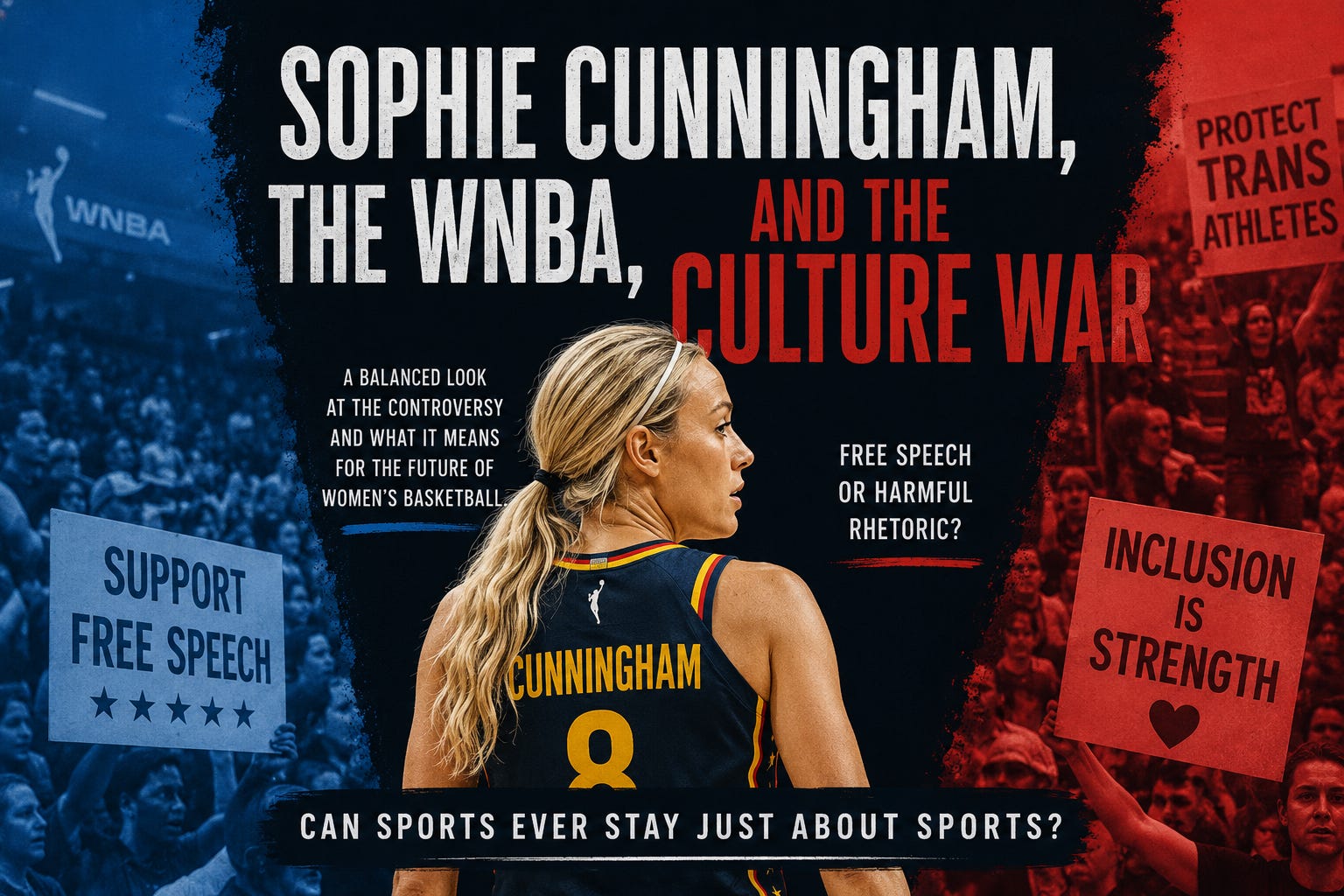
The WNBA has enjoyed unprecedented growth over the last several years. Television ratings are climbing. Arenas are fuller than ever. New fans are discovering stars across the league, and the arrival of Caitlin Clark has only accelerated the spotlight. But with that increased attention has come something else: the nation’s political and cultural divides.
Indiana Fever guard Sophie Cunningham has become one of the latest athletes to find herself at the center of that conversation. Following her public comments opposing the participation of transgender women in women’s sports, Cunningham has received both passionate support and fierce criticism. Protests have accompanied Fever games, political figures have weighed in, and media outlets have debated whether she is simply expressing an opinion or intentionally building a public identity around a controversial issue.
The reaction raises a larger question that extends far beyond one player:
Should athletes use their platform to speak on political and cultural issues, or should sports remain separate from politics?
The Case for Cunningham
Supporters argue that athletes should not lose their right to free expression simply because they wear a uniform. They believe Cunningham is voicing concerns that many people share regarding fairness in women’s athletics and that disagreement should not automatically lead to condemnation.
From this perspective, sports have always been influenced by public policy, whether involving Title IX, equal pay, or rules governing competition. If athletes have historically spoken out for causes viewed as progressive, supporters ask why athletes with more conservative viewpoints should be treated differently.
Many also argue that the backlash itself proves their point. They contend that athletes who hold opinions outside the prevailing culture of a league often face disproportionate criticism, making genuine viewpoint diversity difficult.
The Case Against Cunningham
Critics see the situation very differently.
They argue that Cunningham’s comments contribute to a political narrative that targets an already vulnerable group and shifts attention away from the basketball itself. They also note that the WNBA has built much of its identity around inclusion, social justice, and advocacy for marginalized communities.
For those critics, the concern is not simply that Cunningham expressed an opinion. It is that repeatedly engaging in one of today’s most divisive political debates inevitably pulls the league further into a culture war many fans would rather avoid.
Others believe the controversy has become part of Cunningham’s personal brand, generating attention that extends well beyond her play on the court.
A League Facing New Challenges
The WNBA now finds itself navigating something that many major sports leagues have experienced: explosive growth brings a broader audience, and a broader audience brings a wider range of political and cultural viewpoints.
That creates difficult questions for everyone involved.
Should the league encourage players to speak freely on issues they care about?
Should it attempt to remain neutral?
Is neutrality even possible in today’s sports landscape?
There are no easy answers, and reasonable people can disagree.
The Bigger Picture
Perhaps the most interesting aspect of this debate is that it extends beyond Sophie Cunningham herself.
Every generation has seen athletes become symbols for larger national conversations. Sometimes those athletes intentionally seek that role. Sometimes it is placed upon them by supporters, critics, and the media.
The challenge for leagues like the WNBA is balancing freedom of expression with maintaining an environment where players, fans, and communities from many different backgrounds continue to feel welcome.
Whether someone agrees with Cunningham or strongly opposes her position, one reality is difficult to ignore: the conversation is no longer just about basketball.
As the WNBA continues its remarkable rise in popularity, moments like this may become increasingly common. The league’s future success may depend not on eliminating disagreement, but on finding a way to navigate it without allowing the game itself to become secondary.