
Serena Williams: The Greatest to Ever Do It
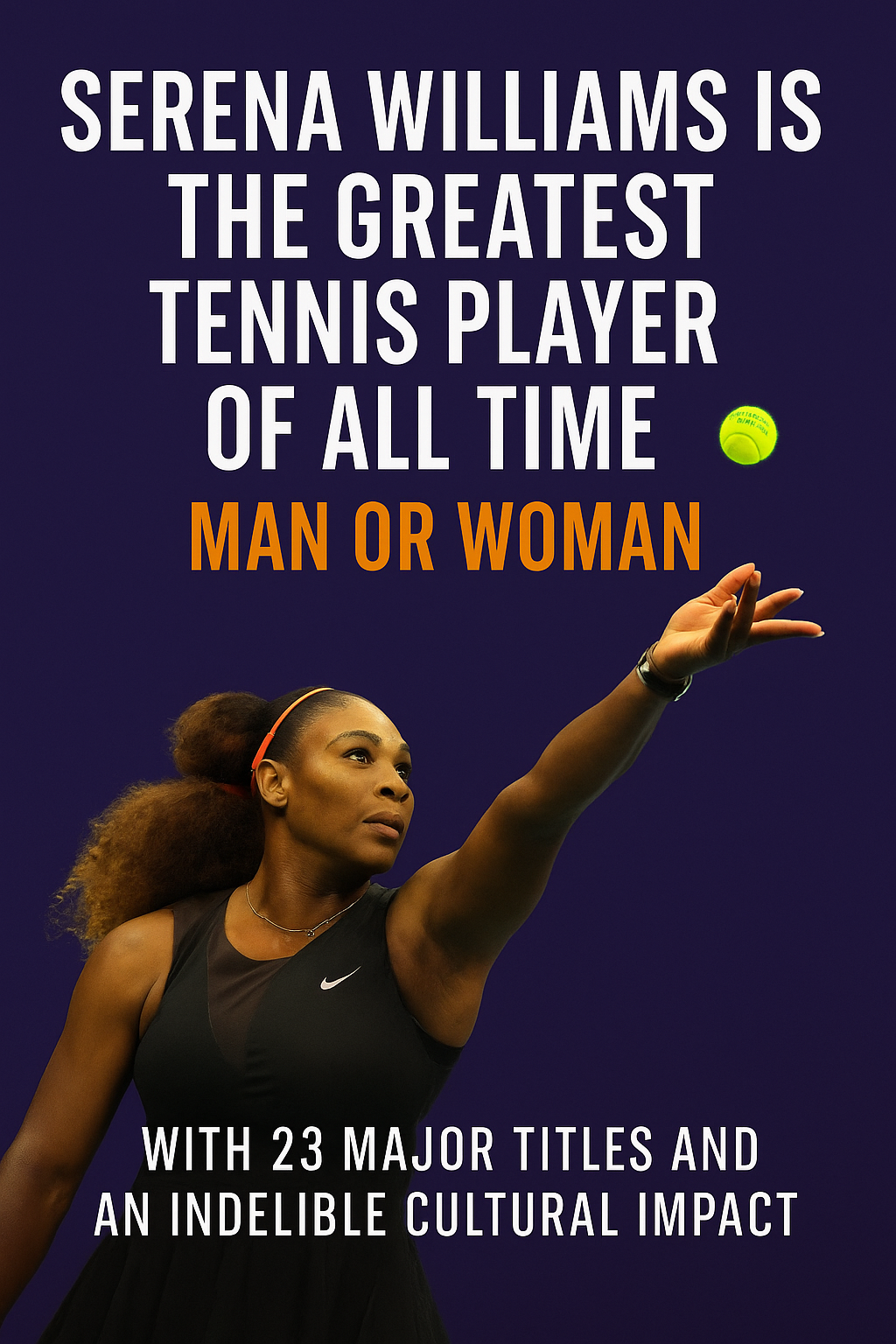
In the never-ending debate about who is the greatest tennis player of all time, the conversation often defaults to statistics. And sure, numbers matter. Novak Djokovic’s 24 Grand Slam titles are historic, and Rafael Nadal’s dominance on clay is unmatched. But when it comes to true greatness—a blend of dominance, longevity, cultural impact, and overcoming adversity—no one stands taller than Serena Williams.
Serena won 23 Grand Slam singles titles, the most in the Open Era, and did so in arguably the most competitive time in women’s tennis history. She won her first major in 1999 at just 17 years old, and her last in 2017, nearly two decades later. She competed against—and dominated—multiple generations of champions. From Hingis to Henin, from Sharapova to Azarenka, from Kerber to Halep, Serena beat them all.
Thanks for reading! Subscribe for free to receive new posts and support my work.
And then, she paused her career to become a mother. Not due to injury or performance decline—she was ranked No. 1 in the world. She was 8 weeks pregnant when she won the 2017 Australian Open without dropping a set. No man in the GOAT conversation—not Federer, not Nadal, not Djokovic—has had to step away at the height of their powers to bring life into the world. That Serena returned to the court after giving birth, survived life-threatening complications, and still reached four more major finals is a testament to her unimaginable grit and willpower.
Meanwhile, Djokovic continues to chase numbers with the benefit of uninterrupted seasons, cutting-edge recovery science, and match scheduling that never has to account for childbirth or postpartum recovery. His consistency is impressive, no doubt. But greatness isn’t just consistency. It’s dominance against odds that most can’t comprehend.
Beyond the numbers, Serena transcended tennis. She broke down barriers in a country-club sport that was never built for someone like her—a Black woman from Compton with beads in her hair and power in her serve. Alongside her sister Venus, she redefined what a tennis champion looked like, acted like, and dressed like. She stood tall through racism, criticism, and double standards that her white counterparts never had to endure. And still, she smiled, she fought, and most importantly—she won.
Serena didn’t just inspire a generation of young tennis players—she inspired a movement. From Coco Gauff to Naomi Osaka, today’s stars often cite Serena as the reason they picked up a racket. She proved that greatness doesn’t have to fit into a mold. She didn’t ask for permission. She changed the game on her terms.
So while Djokovic may end his career with more majors, he’ll never match what Serena meant. She didn’t just chase history—she made it, and then redefined it. GOAT debates will always rage on, but for those who understand greatness beyond the numbers, the conversation begins and ends with Serena Jameka Williams.
Thanks for reading! Subscribe for free to receive new posts and support my work.